Website Design Jax Florida: Effective Web Creation Enhances Online Presence
User Interface (UI) and User Experience (UX) Style: The Heart of Site Style
Ever landed on a website that felt like browsing a maze blindfolded? That's a UI/UX style failure. Website design isn't practically visual appeals; it has to do with crafting an intuitive and enjoyable journey for your visitors.
What's the Difference, Anyway?
UI and UX are often utilized interchangeably, however they stand out. Think about it in this manner: UI is the saddle, stirrups, and reins of a horse-- the tangible elements. UX is the sensation of riding that horse-- the general experience. A stunning saddle (UI) won't matter if the horse tosses you off (poor UX)
Crucial element of a Great UI
- User-friendly Navigation: Can users quickly discover what they're looking for? A clear menu structure is paramount.
- Visual Hierarchy: What should users see? Usage size, color, and positioning to assist their eyes.
- Accessibility: Is your website functional for everybody, consisting of those with impairments? Think about color contrast, alt text for images, and keyboard navigation.
- Consistency: Preserve a consistent appearance and feel throughout your site. This constructs trust and lowers confusion.
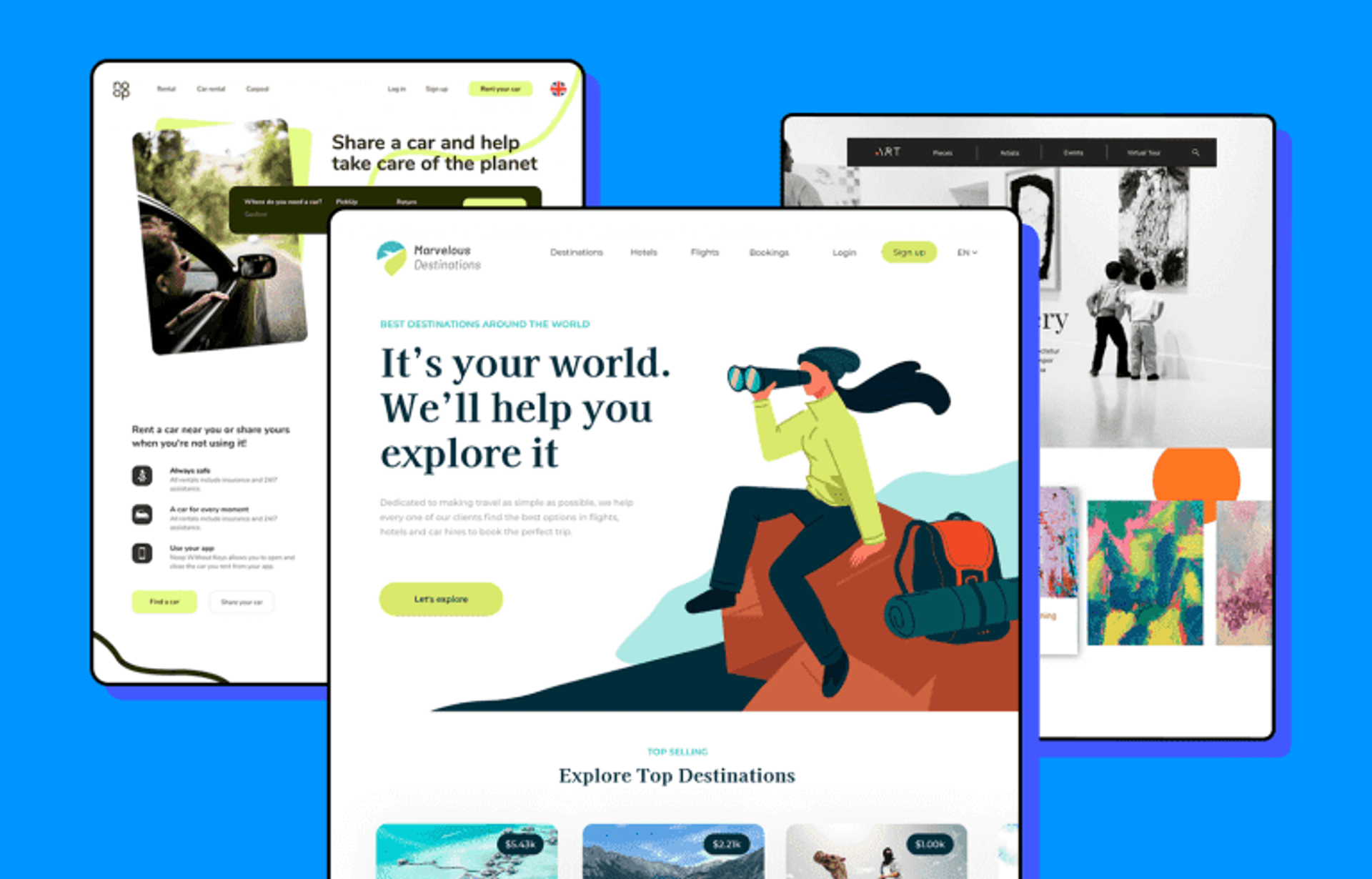
Crafting a Compelling UX
User experience style is everything about comprehending your audience. What are their objectives? What are their discomfort points? What delights them? It's about empathy, research study, and iterative improvement.
UX Best Practices:
- User Research: Conduct surveys, interviews, and usability testing to comprehend your target audience.
- Personas: Develop imaginary representations of your perfect users to direct your style choices.
- Details Architecture: Organize your content in a logical and user-friendly method.
- Usability Screening: Observe users interacting with your website to determine areas for improvement.
The ROI of Good UI/UX
Investing in UI/UX style isn't almost making your site look pretty. It's about driving conversions, increasing customer complete satisfaction, and building brand name loyalty. A properly designed website can be a powerful tool for accomplishing your service goals. Remember that time when Apple revamped their site? Sales soared, and the rest is history. Can you picture what a distinction it could make for you?
Prevent Typical Pitfalls
Sluggish filling times, cluttered layouts, and complicated navigation are UX killers. Don't let these mistakes undermine your website's success. Focus on speed, simpleness, and clarity.
Ultimately, excellent UI/UX style has to do with developing a website that is both stunning and practical. It's about putting the user initially and comprehending their requirements. When you get it right, the benefits are well worth the effort.
Information Architecture: The Blueprint of Your Website
Ever felt utterly lost navigating a site, clicking aimlessly wishing to stumble upon that evasive piece of info? That's a failure of information architecture (IA). Think about IA as the structural skeleton of your website, the unnoticeable structure that determines how material is arranged and identified. It's not practically visual appeals; it has to do with usability, guaranteeing visitors can easily find what they need. Why is this important? Because a baffled visitor is a lost customer. And a lost consumer is bad for service.
Crafting a Smooth Navigation Experience
Navigation style is the interface manifestation of your IA. It's the menus, breadcrumbs, and search bars that guide users through your website. A well-designed navigation system need to be instinctive, foreseeable, and effective. Consider this: the less clicks it considers a user to find what they're trying to find, the much better. What takes place when your site grows, accumulating pages and material like dust bunnies under the sofa?
Common Troubles and Specialist Solutions
One of the biggest difficulties in IA is handling intricacy as your site expands. Unexpectedly, your carefully prepared structure feels like a twisted mess of spaghetti. This often results in "click fatigue," where users abandon their search due to disappointment. How do you avoid this? An essential strategy is regular content audits. Ruthlessly prune out-of-date or irrelevant material. Combine similar pages. Re-evaluate your labeling system. Think of how users really search for details, not simply how you believe they browse.
- Card Sorting: A user-centered style technique where participants organize subjects into categories that make sense to them. This reveals valuable insights into how your target market perceives and classifies details.
- Tree Screening: Examines the findability of subjects within your website's hierarchy. Individuals are given jobs and asked to navigate the existing (or proposed) structure to find the answers.
- User Flows: Mapping out the steps a user takes to complete a particular job on your site. This assists determine possible bottlenecks and locations for enhancement in your navigation.
Another neglected aspect is mobile-first IA. What deal with a desktop doesn't constantly equate well to a smaller sized screen. Prioritize essential material and streamline navigation for mobile users. Consider utilizing a hamburger menu or a bottom navigation bar for simple access to crucial sections.
Furthermore, embrace the power of internal linking. Tactically link related content within your site. This not just improves SEO however also motivates users to explore even more, increasing engagement and time on site. Consider your website as a network of interconnected concepts, not just a collection of isolated pages.
Let's not forget the value of a robust search performance. A well-implemented search bar can be a lifesaver for users who can't discover what they need through traditional navigation. Ensure your search function is accurate, quickly, and offers relevant results. Implement features like autocomplete and suggested searches to even more boost the user experience.
Web Content Method and Development: The Heart of Website Design
Ever discover yourself looking at a blinking cursor, a blank page buffooning your finest objectives for a killer website? It's a familiar scene. A spectacular style can draw visitors in, but what keeps them there? The response, my buddy, is compelling material. It's the bedrock upon which successful sites are built. Consider it the soul of your digital presence.
Crafting a Content Method
Web content method is more than just article and product descriptions; it's a carefully planned roadmap assisting your audience through a carefully curated experience. Think about it as the designer's plan, guaranteeing that every element operates in harmony to achieve your objectives.
- Define Your Audience: Who are you trying to reach? What are their needs, wants, and aspirations? Understanding your audience is vital.
- Develop Clear Goals: What do you want your site to achieve? Are you aiming to produce leads, drive sales, or build brand awareness?
- Conduct Keyword Research Study: What terms and expressions are your target audience using to find info online? Comprehending keyword research is important for SEO.
- Develop a Content Calendar: Strategy your content creation and publishing schedule in advance. Consistency is key.
The Art of Web Material Creation
It's time to roll up your sleeves and begin writing. But not simply any writing. We're talking about material that mesmerizes, notifies, and influences action.
Here's the rub: Producing really appealing web material isn't always simple. The typical mistake? A disconnect between the designated message and how it's really received. It resembles trying to fit a square peg into a round hole. The option? Compassion. Step into your audience's shoes. What are their hesitations? What info do they need to decide? Address these concerns head-on, and you'll be well on your way to developing material that resonates.
Remember, sites aren't sales brochures; they're dynamic, interactive platforms. Usage visuals, videos, and interactive elements to keep your audience engaged. Break up large blocks of text with headings, subheadings, and bullet points. Make your content scannable and simple to absorb.
SEO Considerations: Making Your Material Discoverable
Producing great material is just half the battle. You also require to make certain that individuals can discover it. That's where SEO is available in.
- Use pertinent keywords throughout your content.
- Optimize your title tags and meta descriptions.
- Construct high-quality backlinks from other websites.
- Guarantee your website is mobile-friendly.
Here's a professional pointer: Don't simply stuff keywords into your material. Focus on producing important, helpful content that people in fact wish to check out. Browse engines are getting smarter, and they're satisfying sites that focus on user experience.
The Ever-Evolving Landscape
Web content strategy and creation is an ongoing process, not a one-time event. The digital landscape is continuously progressing, so it's crucial to remain updated on the current patterns and best practices. Regularly analyze your site's performance and make changes to your material strategy as required.
Visual Style and Branding Aspects
A site's visual design is more than simply window dressing; it's the digital handshake that forms an impression. It's about crafting an experience that resonates with your audience, weaving your brand's DNA into every pixel. Consider it as visual storytelling. What story are you informing? Is it among trust and dependability, or innovation and excitement? The branding elements you use are the ink and paper of this story.
Color Psychology: More Than Just Pretty Hues
Ever question why so many banks use blue? Color stimulates emotion. It's not practically looks; it has to do with psychology. Red can shriek urgency, while green whispers growth and harmony. Consider your target market. What colors resonate with them? What sensations do you desire to stimulate? Do not simply choose a color you like; pick a color that works.
One typical bad move I see is overlooking availability. Is your color combination readable for those with visual problems? Tools like color contrast checkers are your good friends here. A visually sensational website design is ineffective if it excludes a part of your audience.
Typography: Your Brand's Voice
Typefaces aren't just typefaces. They're voices. A playful script can communicate whimsy, while a bold sans-serif can project self-confidence. Are you using a typeface that's readable throughout various gadgets and screen sizes? A lovely font is squandered if it's a pressure to check out. And, for the love of all that is holy, restrict the variety of fonts you use. A cacophony of typefaces is a visual nightmare.
Images: A Picture deserves a Thousand Clicks
Stock images have their place, but genuine imagery can be gold. Original photography or illustrations can set you apart. Showcasing your website team, your items in action, or your unique procedure includes a layer of credibility that stock images simply can't replicate. However beware the risks! Are your images enhanced for web usage? Large images can paralyze your website's loading speed, sending out visitors fleeing. Do your images line up with your brand's message and values? A mismatched image can create harshness and puzzle your audience.
- Guarantee images are top quality however optimized for web use (compressed)
- Use alt text for all images, both for availability and SEO.
- Think about using a constant style for your images (e.g., black and white, classic filter)
The Consistency Quandary
Envision a brand that uses a different logo on every page, a various color pattern on every area, and a various font style on every headline. Complicated? Consistency is essential. Your brand ought to be instantly identifiable, no matter where someone encounters it online. Utilize a style guide to record your brand name's visual components and guarantee that everyone on your team is on the very same page. It's a little investment that pays dividends in brand recognition and trust.
One aspect often neglected is the favicon. It's the tiny icon in the browser tab. A properly designed favicon reinforces your brand identity and makes your site easier to find amongst a sea of open tabs. It's the little information that make a huge impact.